Monday, 19 March 2012

On Hobbits and vested rights

The Hobbit pub in Southampton has been attracting a lot of attention recently. Which is why someone chose to call it after the Tolkein character in the first place ... and that is the point of this posting. But before I get to the point I need to wander around a bit.

The pub has borne the name for 20 years, and the film company that now asserts its trade mark rights has owned them for rather less time. There must be a strong argument for the pub having an established use which would defeat a claim for trade mark infringement. The film company has reportedly offered it a licence at the princely rate of $100 per annum, which I reckon falls into the "offer you can't refuse" category, because the alternative would be to be tied up in expensive litigation for years - though it's backed up with something more than menaces: I would not like to rely on prior use if I had such a shaky right to use the sign in the first place. 20 years ago, even with character merchandising in a much less developed state, the Tolkein estate would surely have had a pretty strong claim that passing off was taking place.

And that brings me to the point. That superb resource, Out-Law.com, reports the landlady of the pub (who, in one of those peculiarities of English language, is in fact the tenant, and who being 41 can have had little if anything to do with the naming of the establishment) protesting that "[i]t was never our intention to steal or profit from work written or created by someone else and we do not feel we have." Well, leaving aside the fact that the word "steal" is completely out of place there, consider the second part of this statement. It was never their intention to profit from the Hobbit? Then what did they think was going to happen? The thought process that led to the naming of the pub (which, incidentally, should not be confused with the Hobbit Hotel in Sowerby Bridge) must surely have included the idea that the name would bring in custom that might not be brought in were it to adopt a name like the Royal Oak or the King's Head (the pub apparently took over premises occupied by a hotel which closed in 1989, but history does not seem to record what it was called). That, however innocent the motive might have been, amounts to an intention to profit from the association, to take an admittedly short free ride on the reputation and, dare I say, goodwill, generated by JRR Tolkein in (inter alia) that character.

Oh, and let's think about the last few words of her statement. They might not think they have profited from Tolkein's work - but it's no defence to a trade mark infringement to argue that it didn't work. If in fact the pub has not profited from the association, that will only sound in damages.

Whether or not the film company is the evil bully it is cast as is another matter. Until the terms of the licence are publicly known it is impossible to say, but a royalty of $100 a year suggests, refreshingly, that it isn't.

A trade mark case I couldn't resist ...


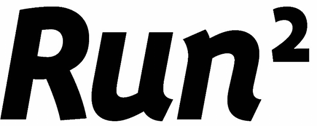
Runners Point's application
A Community trade mark case decided by the General Court a few weeks ago that definitely speaks my language - but a very unedifying decision it is. The Court decided, in Case T-64/11, that the sign above (the subject of the application, filed by Runners Point Warenhandels GmbH), was not similar to the CTMs below (registered by Run2Day Franchise BV) or to the RUN2DAY word CTM. The Board of Appeal had cancelled the Opposition Division's decision that there was a likelihood of confusion decision and rejected the opposition.

Visually and aurally the Board thought that the signs were relatively similar, but conceptually there were big differences. In particular, the Board thought that the “2” element was conceptually different, even if the average consumer might not understand exactly how. That seems to me to be predicated on an ignorance of mathematics consistent with a Daily Mail view of the education system: but then again, the idea of raising a physical activity to the power of two creates a likelihood of a different type of confusion. My old maths teacher, who would rate a wrong answer as "good enough for an engineer", or, if wildly wrong, a vet, might have been tempted to say "good enough for a trade mark lawyer".
Run 2 Day's figurative CTM
The Board also thought that the earlier marks have a weak distinctive character because they both use the descriptive word “run”. When you consider that as well as the differences, the Board thought there was enough to exclude confusion. In addition, the figurative trademarks present even more differences.
Run 2 Day's figurative Benelux trade mark
The General Court annulled the decision of the Office, drawing a distinction between the exponent and the cardinal number, and assuming a knowledge of mathematics on the part of the relevant public much greater than that assumed by the Board. Thank goodness for that.

As for the value of the word RUN, the Board had contradicted itself by holding in paragraph 17 that the element RUN had to be considered identical, even though it was written in different case, but in the next paragraph suggesting that the case difference was important in the visual comparison. Finally, the Court said that Runners Point's sign will be read ‘RUN TOO’ or ‘RUN SQUARED’ by part of the relevant public while the earlier marks would be read ‘RUN TODAY’ (the Court called it a "jeu de mots", but it's a pretty exiguous one). It thought that the word ‘run’ could not be held insignificant in the comparison of the signs. As indeed it cannot, but if that's the best that can be said about a trade mark it's not a very good one, is it? The reason it's not insignificant is that all the signs involved are (IMHO) so pathetic.

The Court was also persuaded by the differences between the applicant's sign and the opponent's figurative marks, which had a lot more characters in them.

As far as the opponent's word trade mark was concerned the Court said:
... s’agissant de l’examen de la similitude visuelle, phonétique et conceptuelle entre la marque demandée et la marque verbale antérieure, la chambre de recours a commis des erreurs qui affectent le degré de similitude constaté des signes en conflit et vicient, par conséquent, son appréciation globale du risque de confusion opérée dans la décision attaquée.
The Board  made errors concerning the degree of conceptual similarity between the earlier word mark and the application, and these errors vitiated (nice word, ought to use it more) its global appreciation of the risk of confusion. So the Court upheld the opposition. It's a little difficult to disentangle the issues of similarity and confusion, especially with the Court's judgment being in French, but I think that quote helps.

But there are so many questions unanswered here. Why should any running shop be able to register a trade mark comprising, in large part, the word RUN? Should these marks not all have been rejected as too descriptive, or even as devoid of distinctive character? There would be a great deal less clutter on the register if, to use an unrelated athletic metaphor, the bar were set higher. Better to exercise your mind a little and come up with something original and memorable, or even inspired, like Sweatshop (which is, incidentally, registered on the basis of acquired distinctiveness to overcome an objection that it is descriptive of goods produced in a sweatshop. The mind boggles. As if anyone would build a brand on that proposition!) Why are Dutch and German companies addressing their customers in English, anyway? And finally, what happened to the apostrophe in the German company's name? If you're going to give yourself an English name, then at least get it grammatically correct!

Unjustified threats in Australian copyright law

Are they actionable? It seems so, according to this report via Mallesons' always-interesting Whiteboard IPblog. Does this mean that Australian law gives a remedy unknown in our copyright statute? Not entirely clear - but what does come through in this report is that an injustice was perpetrated by someone laying claim to rights in a work that rightly belonged to someone else. That seems to have been what the court decided, in which case it is just the sort of unpleasant bullying that the intellectual property system encourages. As the rights become more valuable, and the costs of enforcement become greater, the abuse of IP rights develops into a bigger and bigger problem.

Soon, far from encouraging creativity and inventiveness, IP litigation will take up all the time that people would otherwise devote to such useful activities.

Too many solicitors?

RBS, of all the greenhouse-occupiers in the world who should take care about throwing stones, say that the profession should shed about 5 per cent of its numbers (so Legal Week tells us). How come? There is massive unmet legal need, and reducing the number of people who can deliver the services for which, at the right price, there is so much demand, hardly addresses the real problem. In fact, the suggestion could probably only have come from Planet Banker.

How many times over could the hole in the provision of legal services have been repaired with the money thrown into the banking money pit?

Indeed, how many solicitors could (should) be gainfully employed pursuing claims against the banks whose recklessness has caused so much misery?

And what percentage, pray tell, of bankers would we be better off without? Come to that, how many ex-bankers, or those who would a few years ago have become bankers, are now trying to enter the legal profession?

Thursday, 16 February 2012

A fine mess

In Slater v Wimmer [2012] EWPCC 7 (16 February 2012) the rules about ownership of copyright got into a fine mess. The defendant is (according to Wikipedia) 'a Danish philanthropist, space advocate, entrepreneur, financier, adventurer, author and future space tourist'. I have also seen him described as a Danish celebrity, but as I haven't seen him in The Killing, Borgen or The Bridge, I am discounting that claim. As for being a 'space advocate', I wonder whom he represents? Or is it that he is concerned about the size of new housing (as my two-day-a-week-employers are)?

In his capacity as an adventurer (though presumably also wearing his financier hat, as I am sure these things do not come cheap) he hired a filmmaker to record him, and a few others, sky-diving from Mount Everest. The defendant dived, and the claimant filmed, and in due course the claimant sent the defendant a copy of the film for approval. I imagine he didn't take legal advice (and why should he?) because he seems to have crossed his fingers and hoped to be paid if the film were used.

And indeed it was used, in a programme on Danish TV (so, it's not all dark and gloomy thrillers). The claimant then sent the defendant an invoice. The defendant made clear that he was not inclined to pay, and the claimant uploaded it to YouTube.

The judge (HHJ Birss QC) decided that there was no agreed contract between the parties, so the ownership of copyright fell to be decided under the rules in the Copyright, Designs and Patents Act 1988. He held that the defendant was the producer, having made the financial arrangements, while the claimant was the director, and they were therefore joint authors of the film and co-owners of the copyright in it. Nothing unexpected there, given that no-one could produce a contract to show otherwise. But it's the upshot of that finding that's really interesting: each had reproduced and communicated to the public a work in which the other owned the copyright, and both therefore infringed.

Monday, 6 February 2012

Where's the beef (again)?

Reposted from the Motor Law blog, because it's just too good not to share here too:


America is a difficult place to understand sometimes. Well, most of the time. An extraordinary degree of importance is attached to TV ads showing during the Super Bowl, and this year a General Motors ad has caused a furore. Bear with me - it does have a legal aspect.
The commercial plays on the Mayan calendar's prediction that the end of the world will come in 2012. According to the GM ad, surviving the end of the world (which, when you think about it, is a pretty pointless thing to do) depends on driving a Chevrolet Silverado.

Ford took exception, because the guy who didn't make it to the meeting place after the apocolypse drove the Ford competitor, the F-150.  The F-150? Isn't that the Formula One car? Or am I confusing it with the Ferrari pick-up? Either way, Ford seems to have suffered another corporate sense-of-humour failure: according to GM, the ad is an over-the-top spoof with "the devastation and destruction predicted to occur this year by the Mayan calendar [including] giant attack robots, meteors and frogs falling from the sky." GM's Global Chief Marketing Officer Joel Ewanick said:
We stand by our claims in the commercial, that the Silverado is the most dependable, longest-lasting full-size pickup on the road. The ad is a fun way of putting this claim in the context of the apocalypse.
The ad implies that the Silverado is more durable than the F-Series pickups, with Ford countering that there are more of its trucks on the road with at least 250,000 miles on them. Ford's lawyer has written to GM demanding that they "immediately cease and desist from making any unsubstantiated and disparaging claims regarding Ford's pickup trucks."
GM, still in the spirit of the ad, claim "we can wait until the world ends, and if we need to, we will apologize," continuing (probably not believing their good fortune at the additional publicity being generated by their rival):
In the meantime, people who are really worried about the Mayan calendar coming true should buy a Silverado right away.
Now (to pick up the legal theme in this story again), different countries have different approaches to comparative advertising. It almost invariably involves the use of a competitor's trade mark: in the Silverado ad, the F-word is used - and I don't mean Ferrari's parent ... So there is a prima facie trade mark infringement, except that most laws allow you to use your rival's trade mark to indicate its products. In the UK, it would have to be in accordance with honest practices in industrial and commercial matters and not take unfair advantage or be otherwise detrimental - broadly speaking it would have to be fair. You don't have to study American advertising practice for long to spot that they are rather more liberal over there: which makes it even odder that Ford should have reached for its lawyers over something like this - giving GM the oxygen of publicity even though it seems they had no intention of going further.
In a rational world, Ford's remedy would be to take the corresponding advertising slot next year and come up with something as amusing and memorable. If, that is, there is a next year.

Thursday, 2 February 2012

So, what's the big deal about 9 November?

The same correspondent as I quoted earlier also writes:

And what does 7/8 mean to you? 7th August or 8th July ? This was one where, back in the 1990s and the days of contracts to develop computer or video games, some thought went into whether to "spell out": if the contract was US-driven and delivery of code was required (as it often was) early-October, then there could well be oral agreement for a date of 12th October - so 10/12 was tucked into a Schedule (no "spelling out") and then, if code wasn't on track for delivery, a reasonable argument arose over working to 10th December because that's what the US-driven contract meant by 10/12 ...
I don't recall ever encountering this in a contract, but it is certainly ripe with ambiguity, as I was reminded last year at the première of Richard Blackford's oratorio, Not In Our Time. On 11 September, not 9 November.

The Oxford Style Manual naturally tells us to use day-month-year, and notes that in America the order month-day-year is used. Surely it is much more logical to proceed from the smallest unit to the largest rather than jumping around? Or going from largest to smallest would also make sense, which is what we do with hours, minutes and seconds - an approach promoted by the International Standards Organisation, but not one that would help very much in legal drafting, where the only workable solution seems to me to write out the month in full.

Next: billions.

More irritating writing habits ("Irritating Things")

A long-standing friend dropped me a line yesterday, having read my posting, to reminisce about teaching Wills - something that I'd probably want to forget, had I ever done it: I certainly want to forget about teaching conveyancing, as the students did immediately -  and reinforcing numerals with the numbers spelt out in full. That way round, definitely.
[The] primary reason was to add certainty to the will which was only likely to be read after someone died and avoid "He definitely said he was going to leave me £100,000 - £10,000 cannot be right!" and [the] secondary reason was to draw attention to numbers when someone (usually emotionally) was checking through a will prior to signing. I kept the habit in commercial life because when prices were being changed from draft to draft over (sometimes) months - the words really helped keep track of totals payable.
Yesterday I was reading through a contract, drafted by one party and apparently approved by another, and evidently satisfactory as far as my client was concerned. I was however the first lawyer ever to come anywhere near it ... It purported to deal with the paternity right of a corporate body, and also protected the personal data of the three parties none of which are natural persons; it required none of the parties to do more than use reasonable endeavours to discharge the key obligations it imposed; and, the real reason for this digression, it contained many words and phrases given capital initials in the manner of defined terms, but not a single definition. Which reminded me how much I hate unnecessary defined terms.

Don't get me wrong, I love the way playing with defined terms in a legal document can have a huge effect on its meaning, and how a long and impenetrable contract can be made so much more terse and comprehensible by judicious use of defined terms. If I were minded to improve the one I read yesterday the first thing I would be would be to introduce a set of defined terms. I don't, however, feel that defined terms add anything except pomposity to client briefings and newsletters of the sort mass-produced by what I suppose we can now properly call "law firms", those professional organisations formerly known as firms of solicitors. Here's a doubly appalling example (no names, no packdrill) which I found after about 15 seconds' research on the Net:

The Bribery Act 2010 (the Act) 
The Bribery Act 2010 (the Act) came into force on 1 July ...
Classic! Just in case, in an article about the Bribery Act 2010, the reader would have trouble understanding what the author (who was not identified) meant by the expression "the Act". This is what  Robert St Ivo might call the Statement of the Bleeding Obvious school of drafting. I wonder whether it was a fee earner or someone in the firm's marketing department (they definitely have one) who created that abomination?

Even when used in legal documents, the irritation value of defined terms is greatly enhanced when bold type is used for them. I fail to see what additional value this has, unless the document is being written for the benefit of someone who is too dim to understand how these things work. The same goes for defined terms in block capitals, which are less often encountered but which seem to me to be equally unnecessary.

Next: date formats. I can hardly wait to let off steam!

Tuesday, 31 January 2012

Three (3) things that really irritate me ...

I already aired my views about the bastard conjunction (pace Viscount Simon LC) "and/or", and I just encountered another piece of drafting nonsense that always gets my goat. I entered a competition online, and the rules state -
Two (2) prizes are available. Prize A consists of two (2) economy return flights from Heathrow to Rome and three (3) nights accommodation in a four (4) star hotel in a double/twin room on a bed and breakfast basis. Prize B consists of two (2) economy return flights from Glasgow to Rome via Heathrow and three (3) nights accommodation in a four (4) star hotel in a double/twin room on a bed and breakfast basis.
You don't need to know whose competition it is - anyway, I don't want everyone entering and lengthening the already considerable odds against my winning. What is it with this "number (numeral)" thing? And why that way round? I recall seeing it first, many years ago, where the number was spelt out in words to avoid ambiguity. That was probably back in the dark ages when people wrote using pen and ink (as I was reminded when I wrote a rare cheque yesterday), or typed on sometimes-not-very-legible typewriters, but there is not the slightest possibility of ambiguity arising in clearly presented type on a computer screen. Why do it? There are rules - somewhat variable ones - about when to spell out and when to use numerals: the Oxford Style manual tells me that at OUP the change is at 100, which seems very high; the Economist Pocket Style Manual sets it at 11. The author of the competition rules doesn't seem to agree with either. Would Viscount Simon have called these "bastard numbers", I wonder?

My third bugbear - might as well get them all off my chest at once - is the common use of 23:59 as closing time for competitions and other matters that require precision in this regard. Fine, the promoters are at liberty to set whatever closing time they like, and if they wish to have the competition close at such an odd time of day that's their privilege. If they are potentially giving something to me for nothing, I won't quibble about the qualifying terms. If, however, they have chosen to use one minute to midnight because they cannot grasp, or fear that entrants will not be able to grasp, that the day ends at 24:00, I have no sympathy. It is not a difficult concept. It is not even difficult to grasp that 24:00 one day is exactly the same instant as 00:00 the next. To carve out a minute here and there is nothing but laziness, and a lack of intellectual rigour.

And if I were to enumerate a fourth, it would be the unbalanced parallel construction, but let's leave that for now.

Tuesday, 24 January 2012

Back on the road again

You might have noticed, gentle reader, that I haven't been podcasting lately. There are several reasons. My sponsorship from Olcott International ran out, too many subscribers did not renew, the SRA needed another pound of flesh, and I had taken on a part-time job at the RIBA in addition to continuing to practise law and running a legal publishing company. Something had to give, at least temporarily. At least I could draw encouragement from the fact that the non-renewals liked the product, just didn't get a chance to listen. As one of them wrote:

It's not like listening to a lecture at all, more like sitting having a conversation with a very knowledgeable (and funny) friend ... You have a very clear way of putting things and a very reassuring voice, and I like the way you maintain your enthusiasm throughout.

Now I am ready to get started again. Having a publishing company to assume responsibility for it is a big help (although it makes no difference to who is doing the work - it's still me, with help from the same group of assistants, depending on their other commitments, plus a new one I hope). On the other hand, I have also taken on some tutorial work, at the Russian Academy of Justice in Moscow. In Cheryomushki, to be precise, though it's far removed now from what Shostakovich depicted in his opera set there.

So, the hiatus is over, and I will even try to work back to where I left off - last July. Five missing programmes, if I can manage to reverse-engineer them, but I'll concentrate on getting the new ones recorded and published. I will get January done when I get back from Moscow ...

Thursday, 19 January 2012

Revived copyright suddenly becomes less of a problem

Every New Year's Day, copyright stops protecting works whose author died during the year seventy years earlier. This year, one of those authors affected by the rule - whose works (the published ones, at least) now fall into what is loosely called the public domain, is James Joyce, and this brings to an end a particularly unfortunate episode in the history of literary copyright. This article in the New Yorker by Mark O'Connell explains, and it's well worth the time of anyone interested in copyright to read it.

The coming war on general-purpose computing

That's the title of a great piece, originally a speech to the Chaos Computing Conference in Berlin last December, by Cory Doctorow. It's not as long as it looks at first glance: there are a lot of comments on it.

Sunday, 8 January 2012

Bahamas remiss in making copyright payments

I'm astonished by this story from The Tribune (no, not the one with the Group, if it even exists any more) about how a fund to pay rights owners for the use of their copyright material in The Bahamas has paid out nothing in the eleven years of its existence. Not a matter of earth-shattering importance, though significant to many of those waiting for their money I dare say: but I thought it was worth passing on.

It's a long-running saga, on the theme of small country being beaten up to make it do what the US film industry wants: see this blog entry from a few years ago. Thanks to Cathy Gellis for pointing out to me this additional (predictable) dimension to the story. Still hard to see why all that money has been sitting there with no mechanism to pay it out, though!

Friday, 30 December 2011

Patent wars heating up

Nowhere is intellectual property taking on the characteristics of an end in itself rather than a means to an end than in the mobile phone world. Enforcing patents must be taking as much time and effort as making the phones in the first place. Last week The Guardian reported another development, with IPCom (frequently cast as perhaps the biggest villain of the piece) taking action against retailers selling HTC smartphones in Germany. The report is impressively coherent for a newspaper: the author (Charles Arthur, the paper's technology editor) clearly knows more than a little about patent law. Most journalists would have made this into a story about copyright and trade marks too.

HTC said it knew nothing about any complaints against retailers and that the patent it is alleged to be infringing is in fact invalid. One good reason for having infringement and validity dealt with in the same court? Not in this case, it seems (though the principal remains) because the challenge to the patent takes the form of an opposition in the EPO, the outcome of which is expected on 24 April 2012. By which time an awful lot of HTC handsets will have been sold, or not.

Tougher data protection laws on the way

The European Commission has long been concerned about how Internet businesses treat personal data. Its proposals for a new data protection regulation (to replace the present directive and overcome the problems that arise from the need to transpose the rules into national law) are due to be published on 25 January. The Commission aims to give consumers the power to control the way their personal data are processed by companies, and to impose a bit more discipline on data controllers by introducing fines of 5% of global turnover for businesses who are found to be in breach of data protection laws.

The draft also proposes to introduce obligatory data protection officers for all public sector bodies and private sector bodies with more than 250 employees. The directive made that something that Member States could choose to have: Germany already had it when the directive came into force, hence its inclusion, but the UK government always said it would not be taking up the option. Now it seems it will have no choice - but what organisation of that size doesn't already have a data protection officer, even if they have a load of other responsibilities too?

Fair dealing as a user's right

In this fascinating post on his blog, Ariel Katz of the University of Toronto explains a number of facts about the fair dealing "exception" which have been lost to sight in the century since the Copyright Act 1911 received Royal Assent - on 16 December, a milestone that I was too preoccupied with other stuff to notice. I'll have to be more alert for the centenary of the 1956 Act.

I have been musing on intellectual property rights and corresponding obligations since at least yesterday, after something the IPKat said, and Ariel Katz's piece fits very neatly with that. Fair dealing as a user's right, not a mere exception to the owner's rights. This is how US and UK copyright laws came to diverge, then: this is the difference, exiguous as it might be, between fair dealing and fair use.

And what an excellent title for the piece.

Sunday, 25 December 2011

Limiting Blackberrying to working hours

I was struck by this item from Automotive News: VW is going to ensure that having a BlackBerry does not intrude into its executives' private lives - by craftily ensuring that they shut off email at the end of the working day and start it up at the beginning of the next one. Isn't technology fantastic? Oh, to be able to survive without email being pushed at you all the time. My BB shuts off at 11 pm and starts up again at 6 am: I set it to do that, and I guess a VW executive could do the same - however, setting mine to shut down completely does mean that the phone doesn't ring either - not a bad thing in the middle of the night ...

Friday, 23 December 2011

Nervousness about access to licences stymied SAAB deal

Anyone with an interest in the automotive industry will have been watching with horrified fascination as SAAB moved inexorably towards bankruptcy. It had that sense of seeing a massive accident unfold in slow-motion. Various saviours were lined up, including latterly several Chinese companies: and it seems that SAAB's parent, of which a colleague once memorably remarked that he'd worked in the motor industry since General Motors was a corporal, was reluctant to let any of them have it because they would acquire licences to use GM technology. Here is the story on the Motor Trade Insider website, though it acknowledges that it came first from the BBC. Other media will no doubt have the same story.

A novel(ish) reason for a deal to fall through, and one that makes it even more regrettable that an innovative and long-established carmaker with an attractive line of products (I still have very fond memories of attending a SAAB day at Silverstone years ago, with Erik Carlsson and Barrie Williams as my chauffeurs in then-new 9000s) should have ended up as part of the GM behemoth in the first place. It has now ended in tears. It probably would have done anyway - but on the other hand an MG-style rescue might have been possible.

Penalties for breach of Data Protection Act

The Information Commissioner's Office has had the power to impose financial penalties (not fines) since April last year. Already there have been several examples of this new power being used. Now comes news of the biggest so far: on a local authority, for £130,000, for sending sensitive information about a child protection case to the wrong recipient. Unfortunately, data breaches don't come much worse than that (though there are plenty of examples that are about as bad, but different). The same authority had already had a formal warning from the ICO after to a similar breach. The ICO has also ordered that the authority's staff should be trained in the proper implementation of the authority’s data protection policy.

Wednesday, 21 December 2011

Do anything you want to do

The Internet is a highly democratic medium. Anyone can publish whatever they like, subject to the laws of libel, trade mark and copyright infringement, and trade descriptions (no longer under that evocative name), and other laws, none of which anyone can afford to enforce. Nor is there any quality control. Which is why you encounter rubbish like this:
For a trade mark to be successfully registered it must be a unique word or stylised word which is used to represent specific categories of goods or services.
The firm of solicitors who uttered that piece of nonsense should stick to doing whatever they do best, and not try to take trade mark work away from people who actually understand it. I am constantly appalled at the inaccurate material put out by lawyers trying to market themselves. In a rational world, prospective clients would reject that firm and seek out a lawyer with a more harmonious relationship with the English language, but that might assume critical faculties which our education system has not bothered to cultivate in its charges for many years.

It reminds me of an occasion, ten or twelve years ago now, when I took an unexpected call from my firm's professional indemnity insurers. They had received a claim from a high street firm which had applied to register a trade mark for a client: no search had been carried out, and when the application hit the rocks the client claimed against the solicitors. The insurers didn't know whether there was a hint of negligence in this, so enterprisingly they phoned someone they insured who might know. I was rather flattered. It all depended, I suggested, on the terms of the retainer: had they advised the client about searching? Certainly just because no search was carried out the solicitors could not automatically be said to be negligent - but it was a lesson to me in the importance of sticking to what you know. Given that I am doing an inordinate amount of employment law at present, it might be a lesson I ought to revisit, but it seems there's a firm of solicitors somewhere that needs to learn it too.

What does that sentence say? What's wrong with it? First, a trade mark cannot be unsuccessfully registered. Second, there are many signs that can be registered - successfully registered, indeed - other than words, stylised or otherwise, and certainly not necessarily unique. Are some little bits of patent law creeping in here? And third, even though a trade mark might be coming (as Mr Justice Floyd said in introducing a lecture I attended a few weeks ago) to resemble one of those multifunction tools one sees advertised in the Sunday supplements, I have never seen it suggested that a trade mark might be used to "represent specific categories of goods or services". Used to distinguish the sources of specific goods or services, yes, but if that is what the writer meant that is what the writer should have written. After all, using words to convey precisely one's meaning is the essential skill of the lawyer - isn't it? That, and knowing a bit of law.

Mitchell v British Broadcasting Corporation (BBC) [2011] EWPCC 42

Mitchell v British Broadcasting Corporation [2011] EWPCC 42 (21 December 2011) shows a couple of things that we knew already, though until someone like HHJ Birss QC tells us that they apply to the facts of a particular case there is enough uncertainty to justify playing the forensic lottery. Independent creation is always a defence to a copyright infringement action, and subconscious copying is extremely difficult to prove. In fact, I'd say impossible, except with the assistance of presumptions, which didn't help here. Mr Mitchell thought that the BBC had ripped off an idea he had for an animated TV series for children, and, more importantly because copyright could protect them, a group of characters he devised for it. 147 paragraphs later the judge held that they hadn't.

Friday, 16 December 2011

Word and/or phrase

Talking the other day to a former colleague and professional pedant (in the best sense of the word: indeed, there should be no bad sense of it) I bemoaned the use of the expression "and/or". Of course, he had a relevant quote, but he rattled it off so quickly that I missed it. I spent a few minutes in the Law Society Library subsequently trying to find what he had been talking about, and came up with some great material - but not what I was after ...
"... that befuddling, nameless thing, that Janus-faced verbal monstrosity, neither word nor phrase, the child of a brain of someone too lazy or too dull to express his precise meaning, or too dull to know what he did mean, now commonly used by lawyers in drafting legal documents, through carelessness or ignorance or as a cunning device to conceal rather than express meaning ..." Employers Mut. Liab. In.s Co. v Tollefsen, 263 N.W. 376, 377 (Wis. 1935), per Fowler J.
And (or or, or both):
"To our way of thinking the abominable invention and/or is as devoid of meaning as it is incapable of classification by the rules of grammar and syntax." American Gen. Ins. Co. v Webster, 118 SW 2d 1082, 1084 (Tex. Civ. App. Beaumont, 1936) per Combs J.
Excellent stuff. The American courts always get there first, and usually say it very well. There are instances over there of statutes being struck down for uncertainty because of their use of the monstrosity. All I found from the English courts - all that merited repeating, anyway - was Lord Reid in John G Stein & Co v O'Hanlon [1965] AC 890, saying that the expression was "not yet part of the English language". In fact, it could be argued - couldn't it? - that he was wrong, by the mere act of uttering it himself. But 21 years earlier Viscount Simon had formulated the most powerful denunciation of the usage - too strong, perhaps, for judicial repetition:
"... the bastard conjunction ... which has, I fear, become the commercial court's contribution to basic English."
Bonito v Fuerst Bros [1944] AC 75, which Robert directed me to after I asked him to repeat it. It's good to know that even with a world war in progress the then Lord Chancellor could find time to try to keep the language on the straight and narrow. A pity that his judgment isn't required reading in law schools.

Oh, and you'll find the sources explored at some, entertaining, length in Miscellany-At-Law by the great Sir Robert Megarry. A book that should be on the shelves of every lawyer - why have I never had a copy?

For anyone looking for a steer: the abomination can usually be replaced just with "or", and if necessary the formulation "A or B, or both" (or, I suppose, "any one or more of A, B and C") can be deployed without damaging the language, or offending a pedantic reader. And it will be clearer what is meant.

Court closes Norwich Pharmacal loophole

A Norwich Pharmacal application can be made to the court against innocent third parties to obtain information to enable proceedings to be brought against a wrongdoer. The original case, Norwich Pharmacal Company & Ors v Customs And Excise [1973] UKHL 6,  [1973] 3 WLR 164, [1973] FSR 365, [1973] 2 All ER 943, [1974] RPC 101, [1973] UKHL 6, [1974] AC 133 (26 June 1973) was about patent infringement. The principles laid down there were refined in the later case of Bankers Trust v Shapira [1980] 1 WLR 1275. The power of the court to make such orders was preserved in CPR 31.18.

The applicant for a Bankers Trust/Norwich Pharmacal order must provide a collateral undertaking that they will only use the documents disclosed in the case for the purposes of that litigation. This is covered by CPR 31.22.

Until now there has been no reported case on the interaction between the collateral undertaking and the use in subsequent proceedings of documents which were obtained from a third party following a Norwich Pharmacal application. The leading textbooks disagree on whether the collateral undertaking applied in Norwich Pharmacal cases.

Now, in Shlaimoun & Infina Fund v Mining Technologies (Queen's Bench Division, 13 December 2011, not yet on BAILII) Mr Justice Coulson has found that the collateral undertaking does apply but, when it makes a Norwich Pharmacal order, the court is implicitly giving permission to the applicant to make use of the documents in subsequent proceedings.

CJ Jones Solicitors LLP acted for Mining Technologies and instructed Charles Douthwaite of 4 New Square. Thanks to Chris Jones for a copy of the judgment and this note.

Thursday, 15 December 2011

What to do with a redundant definition in your document?


Although it's a case involving banking documents, Rayford Homes Ltd v Bank of Scotland Plc and Anor [2011] EWHC 1948 (Ch) (23 July 2011) raises points of more general application. It concerned a strange situation: there was an unused definition (of the expression "BoS Priority") in a document that had been based on the bank's standard form, and it should have had a number inserted to give it any meaning anyway. What was the court to make of it?

The correct thing to do is to adopt the "Chartbrook approach", after Chartbrook Ltd v Persimmon Homes Ltd [2009] AC 1101: "there is not, so to speak, a limit to the amount of red ink or verbal rearrangement or correction which the court is allowed. All that is required is that it should be clear that something has gone wrong with the language and that it should be clear what a reasonable person would have understood the parties to have meant" (per Lord Hoffmann). The purpose of the definition, even without a connection to an operative provision in the agreement, was clear enough, and the later insertion (by the bank) of a figure in the space provided. It looked as if it limited the bank's priority to the amount stated, although the bank argued that it didn't because the definition wasn't actually used in a provision of the loan agreement. Not a very attractive argument when it was the bank that had, first of all, deleted the provision which the definition should have been connected to, and second, inserted a figure that placed a limit on its own priority. And adopting a Chartbrook approach the court took the view that the bank was indeed bound by what it had written into the definition. The fact that all that was needed to give the definition effect was to add a few words to an operative provision was not determinative, but it seems to me that it indicates that little ink would be needed to make the agreement work as it looked as if it should work.

Monday, 5 December 2011

Hodgson v Isaac: how to show copyright infringement

In Hodgson & Anor v Isaac & Anor [2010] EWPCC 37 (5 December 2011) HHJ Birss QC had to compare the claimant's book against the defendants' film script. If the book had been fictional, the matter would have been quite easy to decide: there would either have been copying, or there wouldn't, and we could then go on to consider exciting issues of whether taking facts only amounted to an infringement. But here the book was Mr Hodgson's biography, which Mr Isaac had not read: however, he had heard that history from Mr Hodgson's own mouth.

Interestingly, Mr Isaac offered to submit to arbitration by the Writers' Guild to determine the question of copyright infringement. An appropriate order was made by the court initially seised of the matter (Newcastle County Court) but the Guild said it was not equipped to carry out the task. (I wonder what the Society of Authors would say? I doubt they are any better equipped to carry it out - the expertise is there, as it probably is at the Guild, but not the time.)

So the judge compared them, and came to the conclusion that the screenplay reproduced a substantial part of the book. He considered plot, characters and incidents. Mr Isaac had had a copy of the book but claimed not to have read it. The judge took the view that there had been copying, and then that the defendant had taken a substantial part - a part in which the elements reproduced are the expression of the intellectual creation of their author, in line with the Court of Justice's judgment in Case C‑5/08, Infopaq.

Thursday, 1 December 2011

Copying functions of computer program is not copyright infringement

That's supposed to be how the law always worked, and Pumphrey J said as much in his judgment in Navitaire v easyJet [2004] EWHC 1725 (Ch) (30 July 2004).  Advocate General Bot has now largely endorsed this approach in his opinion in Case C-406/10, SAS Institute v World Programming, a reference from the High Court (Arnold J, who posed eight very detailed questions) which has provided an invaluable and rather overdue opportunity for an explanation of how the earliest European Community effort in the field of copyright, the software directive, works."The functionalities of a computer program and the programming language are not eligible, as such, for copyright protection," he said. But the functionality of the program might be a substantial part of the copyright work, and it's a matter for the High Court to decide whether that's the case.

The program in suit emulates the software environment created by SAS, allowing programs written to operate in that environment to operate without it, using a much cheaper alternative. The software directive distinguishes copyright purposes between "ideas and principles which underlie any element of a computer program, including those which underlie its interfaces" and the expression of those ideas. Given the nature of the software in this case it would be hard to imagine a case which involved more "idea".

Advocate General Bot said that the possible workings of a computer program and the language used to create it is not in itself copyrightable because they constitute ideas without "concrete expression". Ideas on their own are not copyrightable.
The AG defined the functionality of a computer program as "the set of possibilities offered by a computer system, the actions specific to that program," going on:
In other words, the functionality of a computer program is the service which the user expects from it. In my view, the functionalities of a computer program cannot, as such, form the object of copyright protection under Article 1(1) of Directive 91/250. 
... Where a programmer decides to develop a computer program for airline ticket reservations, that software will contain a multitude of functionalities needed to make a booking. The computer program will have to be able, in turn, to find the flight requested by the user, check availability, book the seat, register the user’s details, take online payment details and, finally, edit the user’s electronic ticket. All of those functionalities, those actions, are dictated by a specific and limited purpose. In this, therefore, they are similar to an idea. It is therefore legitimate for computer programs to exist which offer the same functionalities.
There are, however, many means of achieving the concrete expression of those functionalities and it is those means which will be eligible for copyright protection. ... [C]reativity, skill and inventiveness manifest themselves in the way in which the program is drawn up, in its writing. The programmer uses formulae, algorithms which, as such, are excluded from copyright protection because they are the equivalent of the words by which the poet or the novelist creates his work of literature. However, the way in which all of these elements are arranged, like the style in which the computer program is written, will be likely to reflect the author’s own intellectual creation and therefore be eligible for protection.
Remarking that this was consistent with  the express purpose of the Directive, he went on:
To accept that a functionality of a computer program can be protected as such would amount to making it possible to monopolise ideas, to the detriment of technological progress and industrial development.
But then, in almost the next paragraph, he said:
In my view, as is the case with other works that may be protected by copyright, the fact of reproducing a substantial part of the expression of the functionalities of a computer program may constitute an infringement of copyright.
The distinction between ideas and expression is necessarily very nuanced, and reproducing the source code that expresses the functions of a computer program could infringe copyright. The Infopaq judgment (Case C‑5/08 [2009] ECR I-6569) tells us that parts of a work enjoy copyright protection, provided that they contain some of the elements which are the expression of the intellectual creation of the author of the work.  A computer program must be regarded as a literary work in its own right, so "the same analysis must be adopted in relation to the elements that constitute the expression of its author’s own intellectual creation".

The question of infringement concerns whether the reproduction is of "a substantial part of the expression of the functionalities of a computer program". This analysis takes no account of the "nature and extent of the skill, judgment and labour expended in devising the functionality of a computer program". The way that computer programs are written will determine whether they are protected by copyright: that's a matter of the degree of originality in the writing of the program. So copying the functions of a program is not infringement, but copying the expression of those functions might well be, according to the Advocate General (and, in due course, probably according to the Court): and the task of drawing the line, as it had to be, is left to the referring court. I wonder whether Arnold J feels he's got value for the effort he put in to posing the questions in the first place?

Tuesday, 29 November 2011

Class headings do not cover all

Advocate General Bot has given his opinion in the IP Translator case, Case 307/10, Chartered Institute of Patent Attorneys indicating that he doesn't think that an application that repeats the class heading from the Nice Classification does cover all the goods or services in the class. If that sounds arcane, consider the application in suit - which was designed, and filed, with a view to getting an authoritative statement of the law in this area: CIPA filed for the UK trade mark IP TRANSLATOR in Class 41, the class for translation services, for "education; providing of training; entertainment; sporting and cultural activities" - the class heading for that Class, to which translation services are proper, but which does not include them.

The AG says that the goods or services have to be stated with sufficient precision and clarity as to enable the competent authorities and "economic operators" (are they related to stakeholders, perhaps?) accurately to determine the scope of the trade mark. Exactly. The appropriate level of generality will vary from case to case - that sounds like a bit of a cop-out, but at the level at which the Court of Justice operates statements like that are surely unavoidable. The class headings might, says the AG, suffice for this purpose, so they could be used - but subject to that comment about precision and clarity (and it seems to be lacking in class 41).

Then he comes to the nub of the problem, Communication 4/03 of the President of OHIM, which established the "class headings cover all" principle. This does not satisfy the requirement for precision and clarity, whether for Community trade marks or national ones - and this leads to cluttering, because there are too many over-broad registrations. Moreover, there is the interesting paradox (all tied up with the difficult question of how this mess can be fixed) that specifications will have to be amended by being limited (maybe the addition of the time-honoured formula, "all being translation services", if that's still permissible, to the IP TRANSLATOR specification) but the limitation will have the effect of adding goods or services that weren't included in the first place. Only the European Union could create chaos like this.

The fact that Nice is periodically amended, and new goods and services slotted into the existing classes, which often retain unchanged class headings, is another demonstration of the absurdity of allowing registrations on this basis. Precision and clarity are absolutely essential, not the lazy, thoughtless approach encouraged by OHIM's ruling, and moreover we need something that links registrations more closely to the actual use made of the trade mark, otherwise the registers - national and regional - will become more cluttered, the range of available trade marks will become more depleted, and businesses will find markets foreclosed to them just because they cannot use the trade marks they want (or need) to be able to use. Let's hope the Court of Justice recognises these problems and imposes some commonsense on the trade mark system.

Computer simulations patentable


In Re Halliburton Energy Services Inc [2011] EWHC 2508 (Pat) (05 October 2011)  the Patents Court (HHJ Birss QC) held that computer simulations of designs are not just mental acts (and therefore unpatentable). The IPO had wrongly applied patent law when it assessed four applications for patents for computer simulations of designs for the working of drill bits for the oil industry. The IPO had wrongly asked whether the inventions were capable of being performed mentally: the right question was whether they were in fact merely performed mentally. This had caused the IPO to fail to recognise that the claims were make only in relation to the simulations themselves and were therefore not subject to the exclusion for mental acts. The examiner had applied the exclusion on too broad a basis.
“The claimed invention cannot be performed by purely mental means and that is the end of the matter. Put another way, the contribution is a computer implemented method and as such cannot fall within the mental act exclusion.”
The judge said that the inventions were not subject to any of the other exceptions to patentability. They merged mathematical calculations with computer software and were sufficiently technical to be patentable. The invention was more than just a computer program: it was a method of designing a drill bit, and it did not fall solely within the excluded territory.
The problem with the application had been that it was very broad. It did not not tether the claims to simulations on a computer, or to actually manufacturing improved drill bits, but this was deliberate as the draftsman wanted to catch such matters as consultants designing drill bits as well as bits which had been manufactured. However, the skilled reader of the patent would understand that the simulations would be carried out using a computer, so the complicated wording might have been unnecessary.
As for the mental act exclusion, this is very narrow and covers only calculations which are actually performed mentally. It does not catch calculations carried out using a computer.

Sunday, 30 October 2011

Second-hand software

There's a lot of it around, but is it legal? Can the licence be transferred to a buyer? That was the issue in  Vernor v. Autodesk, in which Mr Vernor offered unopened, authentic, copies of AutoCAD for sale on eBay. When challenged he applied to the District Court for the Western District of Washington for declaratory relief (that link takes you to a piece published by Foley Hoag) and he got summary judgment. On appeal from the District Court, the Court of Appeals for the Ninth Circuit held that Autodesk's customers were licensees and not owners so the sale of the AutoCAD software to Vernor, which was prohibited by the AutoCAD license, was invalid. Mr Vernor was neither a licensee nor an owner and the first sale doctrine was of no assistance to him.

On 3 October the US Supreme Court declined a request to grant certiorari. This means that the Ninth Circuit's three-prong test for determining whether a software user is a licensee or an owner is the law, at least in the Ninth Circuit. This raises the intriguing and very US question whether other circuits will follow the Ninth, and if differences emerge the Supreme Court might well have to take the matter on. Meanwhile, the original claim is back with the District Court, and at the same time an expedition to Luxembourg is under way (from the Bundesgerichthof) in Case C-128/11 Oracle International Corporation v usedSoft GmbH, which might of course produce a completely different answer ... Given that the terms of the licence are crucial in these cases, that might be quite possible and perfectly correct. In any event, it's an interesting area.

Canadian copyright law and digital locks

Here's an interesting posting by Michael Geist about the proposed Canadian copyright law changes, which would deal with (among other things) breaking digital locks. Canada would fall into line with the USA and its Digital Millennium Copyright Act, a piece of legislation which Draco would probably find quite to his taste (although he'd surely find the omission of the death penalty inexplicable), and as one would expect the chattering classes have a lot to say about this piece of cultural imperialism and the Conservative government's craven submission to Big Copyright - here, for example.

Saturday, 29 October 2011

A particularly obscure branch of metaphyiscs


Not my phrase: that's what Jacob LJ called design law, in Dyson v Qualtex five years ago. Earlier this week, I spent a day presenting a course on IP infringements and enforcement - someone else's course, so I was using materials I hadn't prepared, though I don't think I'd have covered the subject any differently. I found myself having to explain to the audience that designs featured less in real, practising, life than any other area of intellectual property law, but that the law was so complicated - such a mess - that it demanded a large chunk of such a course.

I've been explaining the same thing to my Russian students, and my American student, all studying for external London University LLB degrees, the American one having done her resit yesterday. The examiner demonstrates what might be thought to be an unhealthy interest in designs - worse than that, in fact, because the Community system isn't part of the syllabus and copyright seems to loom large, which makes it all seem highly artificial. But it's certainly an area of law in which, right now, there's quite a lot going on, with the Court of Justice handing down its judgment in the Pogs case last week and now the Court of Appeal deciding Dyson Ltd v Vax Ltd [2011] EWCA Civ 1206 (27 October 2011).

The story so far is that last year Mr Justice Arnold held that Vax's Mach Zen vacuum cleaner did not infringe Dyson's UK registered design, much to some people's surprise and Sir James Dyson's dismay. Dyson appealed.

To succeed in such an appeal, the appellant would have to show that the judge had gone wrong in principle. That's a big ask, and I don't think Mr Justice Arnold is the sort of chap to do that very often. The case was based on Article 9(2) of the Community design directive, which refers to the degree of freedom of the designer in developing his design, and that (as Jacob LJ observed) plainly refers to the registered design, not the accused object. Dyson complained that the judge had referred several times to the freedom of Vax's designer. Jacob LJ thought that it mattered not, there being no change in the degrees of design freedom between the date of the design and that of the design of the Vax machine.

Dyson's counsel (Henry Carr QC) also stated his case as being that the judge had effectively decided (as paraphrased in the Court of Appeal by Lady Justice Black) that the better the design the more people would say that it is only going to be worse if I do it a different way, so the less the design freedom, and ingenious and innovative designs would be penalised. Jacob LJ did not read the judgment this way. Indeed, the judge specifically held that the registered design was "strikingly different" from the existing "design corpus": Dyson argued that he had however failed to apply the principle that where this is the case the new designi s likely to have a greater overall visual impact than if it is "surrounded by kindred prior art", as HHJ Fysh pithily put it in Woodhouse. The Court of Appeal rejected this approach, holding that the judge was still entitled to find that the Vax machine did produce on the informed user a different overall impression from that produced by the Dyson design.

Sir James Dyson is clearly unhappy, according to this report, though I don't think he has taken full account of the rile of the Court of Appeal. I am disappointed that he should have launched such a diatribe, although I can understand that he feels miffed. He ought however to be directing his ire against a design law which seems more hopeless the  more I think about it.

Friday, 14 October 2011

Men at Work case won't go to appeal

That interesting Australian copyright case involving the song Down Under by Men at Work, which was held to infringe copyright in the well-known, or "iconic" as it was called in the litigation, Kookaburra, has come to a halt with the High Court rejecting EMI's application to appeal. Mallesons have the story on the IP Whiteboard blog, which is always full of good stuff.

I'm not only old enough to recall the song, I am old enough to consider it new, in the sense that it is post-New Wave. And I couldn't remember anything in it that sounded like Kookaburra. Seems I was right, because the court needed expert assistance to find the bits that had been copied: there was no "ready aural perception" of the copied bars but they were there. But that does seem difficult to square with the notion of a musical work, which is intended to be enjoyed by being listened to (a literary work, by contrast, being enjoyed by being read). If you can't hear the similarity, is music copyright really engaged?

Thursday, 13 October 2011

Any electronics patent attorneys out there?

My good friend Pete Fellows, whose recruitment firm sponsors my IP podcasts and blawgs, tells me that he is looking for patent attorneys (including part-qualified ones) with a background in electronics, physics or computer science. It seems they are in short supply, and he's even offering a Samsung Galaxy fondleslab (original version) if they place a candidate you introduce to them. See here for more information.

Thomas More and the European Union?

Reading - as I should have done many years ago, having bought it in August 1980 - Paul Johnson's absorbing history of Britain, The Offshore Islanders (Penguin, 1972), this sentence strikes me:
But equally he [More] can be seen as upholding an ancient and ramshackle structure, whose reality had never corresponded to its ideals, and which was now breaking up under the stress of nationalism ...
The next three words are, of course, "the Catholic Church", but it does sound remarkably like the European Union, of which  the Catholic Church (and before it the Roman Empire) was a precursor in the limited sense that it created a union of a sort among the nations of Europe. I particularly like the "reality never corresponding to ideals" bit, which to me seems especially apposite as a description of trade mark law in the European Union. To that perhaps one should add designs, and prospectively patents too.

Wednesday, 12 October 2011

An Australian Feist

Copyright in compilations remains a thorny issue, and if I needed reminding of it the other week explaining it to Russian law students certainly worked. Databases that aren't compilations, and vice versa - we are into the realm of metaphysics here.

Feist, SCOTUS's last word (as far as I know) on the subject of copyright in compilations (in suit, an alphabetical telephone directory for part of rural Kansas where I imagine telephones are few and far between, people likewise), was the death-knell for the "sweat of the brow" test, one of those graphic expressions that American lawyers use to the delight of legal dictionary-writers. In Telstra Corporation Limited & Anor v Phone Directories Company Pty Ltd & Ors [2011] HCATrans 248 (2 September 2011) the High Court of Australia has taken what seems to be a similar step, and given the close connection between Australian and English law this might be more important for us than Feist was.

The case raises interesting points about the need to identify the author or authors, and about the effect of using a computer. It has always struck me that making an alphabetical list using a computer is extremely unlikely to result in any sweat on one's brow. Read the interesting review of the points on Mallesons' IP Whiteboard blawg.

Troll trounced: Righthaven loses out

It built its business on acquiring copyrights from newspapers and going after bloggers and others who used photos and the like on the web, but the model appears to have been flawed, reports Washington College of Law's Intellectual Property Brief. Righthaven sued one Leland Wolf for using a photo from the Denver Post, but the defendant successfully challenged the Colorado Dostrict Court's jurisdiction, which being based on copyright infringement was inextricably bound up with the merits of the claim. The judge held that the copyright assignment agreement had not transferred any real ownership interest to Righthaven, who could not therefore sue as owners.  He dismissed the case and awarded Mr Wolf costs.

So what went wrong? I think that will have to await sight of the judgment, which doesn't appear to be on the web just yet, but the Brief on the Motion to Dismiss (which I am pleased to see was co-drafted by my friend Marc Randazza) gives us a good clue: the assignment, such as it was, gave Righthaven no rights to use the copyright works, just to sue for infringement. The rights were assigned "solely to coat its lawsuits with the veneer of legitimacy" - nice turn of phrase there. Here is the Strategic Alliance Agreement (see clause 7 in particular).

The excellent Electronic Frontier Foundation filed an amicus brief in the case and have more information about it here.

Wolf is one of over 50 cases brought by Righthaven in the Colorado court, so from their point of view a lot hangs on it.

Database protection in Argentina

There are criminal sanctions attached. I get worked up about the offences that have been bolted onto our IP laws, but they don't come close to this. Perhaps some businesses would like them to.

According to a newsletter from Marval O'Farrell & Mairal, a recent case was brought by a corporate event planning company against two former employees who had made off with the database and set up in competition. This database, among other things, contained the distilled wisdom and experience of the organisation on how to organise such events. The Court of First Instance indicted both defendants on charges of intellectual property fraud, pursuant to Section 71 of Intellectual Property Law No.11,723 (which covers databases by virtue of Law No. 25,036). They appealed, arguing that they were only re-using ideas not expression, but the Court of Appeals upheld the trial court. This database, far from being a mere compilation of information, was the result of careful data selection and classification, designed to support a specific working methodology, tailored to the specific needs of a particular company.

Intellectual property fraud. A concept to conjure with.

Register a Community design within 48 hours

You can, according to President Campinos of OHIM (reported here by MIP). You have to pay the application fee using a current account with the office because other payment methods such as credit cards and bank transfers cause delays (the banks taking the opportunity to put the money into Greek bonds or something overnight, I suppose) and submit a high-quality application, which means email not a smudged fax. Ideally you won't claim priority, but if you do you must submit all the priority documents at the outset. These details appear to have been added by MIP as they don't appear in the published version of the President's speech - he might have been ad-libbing.

Of course, the speed of processing is down to the fact that there is no substantive examination, perhaps no human intervention at all, which makes me wonder why it can't be done within 48 seconds. The Community registered design system is a deposit system in all but name, so what you get at the end of the process, however quick it might be, has to be heavily discounted because of the lack of scrutiny. Registered designs are, of course, virtually impossible to assess for novelty, because the prior art is not organised in a searchable form.

Personally, I'd rather the process took longer and resulted in the grant of a reliable registration. A quick process for obtaining a right that stands a good chance of being worthless is the ultimate triumph of form over substance, making the Community registered design an end in itself. It also makes the application fee little more than a tax on businesses to fund a pointless institution. Excellent nonsense.

Tuesday, 11 October 2011

The web should have been patented

So said WIPO DG Francis Gurry. He might be thought not to be the most impartial commentator on the desirability of patents ... For some reason his comments have only now achieved wide circulation, thanks largely to Cory Doctorow who posted a commentary here. The video is on YouTube (naturally).


My mind is boggling - though I can see something in rationing the web, which would be one effect of giving the underlying ideas patent protection. It would be much more manageable, wouldn't it, if there were less stuff on it? You'd be able to find what you wanted more efficiently. Unless what you wanted was what happened to have been rationed out of existence: like this blog, I reckon. Maybe the world would be a better place for that. It would give governments a much better chance of controlling what's on it, too: all that tedious free speech stuff would go. Mr Gurry seems to base his argument on the investment that would come in, which (a) ignores the amount of investment that there is in the technology without basic patent protection and (b) would probably put control in the hands of the Disney Corporation, News International and a vast array of pornographers. Much better.

Doctorow says that this could only possibly come from "a blind adherence to the ideology that holds that patents are always good, no matter what", and it's hard to disagree. Gurry says that IP is a very flexible system - a sweeping generalisation, I'd say, when he's trying to commend patent protection - and draws a comparison with the invention of the saxophone, which he said is the only instrument in the classical orchestra which has ever been patented. Well, I don't know whether there is a precise definition of a classical orchestra, but I doubt it would include a saxophone, which is a rare addition to what most people would understand as a classical orchestra: and as we are now discussing exotic additions to the classical orchestra, the ondes martenot was (were?) patented in 1928, and indeed there seem to be quite a few patents surrounding that instrument.

Gurry argues that patent protection for the saxophone meant that others (in addition to Adolphe Sax, who must be in the top seven of famous Belgians: Ickx, Merckx, Magritte, Rubens, Hergé, ... Plastic Bertrand - does Rubens count, if Belgium did not exist as such in his lifetime? And is it really appropriate to include Audrey Hepburn just because she was born in Brussels of an English father and a Dutch mother?) were able to make improvements to the instrument, unlike the violin the secrets of which died with a handful of individuals in Cremona centuries ago. I don't think there's much danger of the secrets of how the web works suffering the same fate. What the intellectual property system needs is less of this hyper-inflation.

Thursday, 6 October 2011

Trade marks and public policy

The General Court has also decided that, as a trade mark, PAKI is contrary to public policy or to accepted principles of morality: T-526/09, PAKI Logistics GmbH v OHIM. The court remarked that the word was a racist expression and therefore unacceptable as a trade mark. This notwithstanding that the applicant is a reputable German logistics company and the mark is used in the form PAKi. (I can see the connection between the PAK element and logistics - and they have been around since 1974.) Pakistan, incidentally, is called Pakistan in German.

For those unfamiliar with English racist slang, the expression was commonly used, is used less often now, with a considerable measure of ignorance as well as malice to denote just about anyone from the Indian sub-continent. I don't believe it was, or is, used exclusively with malice, and it can sometimes be intended neutrally - we have an "Indo-Pak" restaurant not far away from home, although there is a big difference between using the term for a whole people and using it for an individual. Often people use expressions like this with the best of intentions, unaware of the hurt they cause.

The court also noted that protection against discrimination is a fundamental value of the EU, provided for in Articles 2 and 3, paragraph 3 of EU Treaty and Articles 9 and 10 of the Treaty on the Functioning of the European Union, and Art.21 of the Charter of Fundamental Rights of the European Union.

Well, the measure of what should be acceptable is easy enough: if people don't like it, we should all respect their wishes, not use the word, and not allow it to be registered as a trade mark. The court was presented with evidence that the word is used in the Pakistani community, and is not necessarily offensive to them: but even if the law is protecting the sensibilities of the chattering classes, perhaps that's reason enough to refuse registration. But it does seem an unfortunate side-effect of the Community trade mark system that a German company should find its name unprotectable at EU level.

Because it involves the same provision of the regulation, and because I have only recently caught up with it, and because of my visit to Russia last weekend, I'll also add a reference to Case R 1509/2008-2 Couture Tech, a decision of the OHIM Second Board of Appeal in an appeal against a decision to refuse registration of the old Soviet Union symbol of hammer, sickle, globe, red star, and "workers of all countries, unite!" in 15 languages (none of them English, rather like a General Court judgment). The board noted that the Soviet Union - which the board seems to treat as interchangeable with the Soviet Communist Party, perhaps rightly - was

... a totalitarian state that massively violated human rights, under the leadership of the Soviet Communist party, committed crimes against humanity, including summary executions, torture, sending innocent people to labour camps, involuntary settlement and stripping of citizen’s rights. It is commonly  accepted that the ethnicity-targeted population transfers in the Soviet Union led to million deaths due to inflicted hardships. For example, 10 percent of the entire adult Baltic population was deported or sent to labour camps, as can bee seen from Wikipedia printouts.
Allow me in passing to exclaim - "Wikipedia???". But the historical facts are beyond dispute, even if there might be arguments about the details, and the Board's conclusion that the trade mark the subject of the application would cause offence in countries which suffered under the Soviet regime, some of which ban such signs as some countries do Nazi insignia.

Good call: but what baffles me is why anyone would think this a suitable sign to use as a trade mark in the first place?

B&O loudspeaker shape cannot be registered as trade mark

The directive and the regulation both say you cannot register as a trade mark a shape that gives substantial value to the goods to which it is applied. In Case T-508/08 Bang & Olufsen v OHIM the General Court applied this rule to uphold the Office's refusal to register the shape of its speakers.

And quite right too. That provision has always caused me a little worry, as the whole point of applying a trade mark - any sort of trade mark - to goods is to enhance their value. A plain unmarked bottle of brown fizzy liquid is worth little: make the bottle curvaceous and apply a Coca-Cola (or Pepsi) label and it's a different story. But just because the law might be difficult to apply in extreme cases doesn't mean it is wrong.

The B&O case has a long history. Their application, filed in 2003, was refused as being devoid of any [sic] distinctive character. (This "devoid of any" formation grieves me - surely the "any" is redundant, as "devoid" means having none at all, without the need to reinforce it.) The Court then upheld their appeal, sending the case back to Alicante, where it was refused again but this time on the grounds that the shape gave substantial value to the goods. You have to acknowledge the applicants' persistence, because they set off on another expedition to Luxembourg to get that straightened out too.

Except that the court did not oblige:

The Court finds that in the present case the shape for which registration was sought has a very specific design. In the Court’s view, that design is an essential element of Bang & Olufsen’s branding and increases the value of the product concerned. Furthermore, it is apparent from extracts from distributors’ websites and online auction or second-hand websites that the aesthetic characteristics of that shape are emphasised first and that the shape is perceived as a kind of pure, slender, timeless sculpture for music reproduction, which makes it an important selling point. Accordingly, the Court holds that OHIM did not make any error in finding that, independently of the other characteristics of the product at issue, the shape for which registration was sought gives substantial value to that product.
The court also noted that it was perfectly OK for the Office to work through the absolute grounds for refusal one after the other, as they are independent. The result: no trade mark protection for the shape. I know it looks pretty distinctive, and B&O thrive on the appearance of their products, but the interface between design protection and trade mark protection is one that has to be guarded carefully. These same loudspeakers - the designs for them - can be protected for 25 years as designs, and if that is considered to be the right period of protection then whose interest would be served by permitting them to be protected by the trade mark system too, potentially for ever?

High Court remits software patent matter to Comptroller

Re Halliburton Energy Services Inc [2011] EWHC 2508 (Pat) is an appeal from the Comptroller. HHJ Birss, sitting as a High Court judge, allowed the appeal and remitted the case back for the Patent Office to try again. The Deputy Director, Mr Thorpe, acting for the Comptroller had rejected four applications, on the grounds that they were within the "mental acts" exclusion or were computer programs. The claims were to methods of simulating drill bit performance, without going on to deal with manufacturing the things once they had been simulated.

The law in this area was laid down by the Court of Appeal in Aerotel v Telco / Macrossan's Application [2006] EWCA Civ 1371 (in which Jacob LJ gave the judgment of the court) and Symbian v Comptroller [2008] EWCA Civ 1066 (in which he didn't, though the judgment of the Court which Lord Neuberger gave presumably contained a lot of Jacob). But there remains a great deal of dispute about the rules, with differences between UK Office practice and the EPO, complicated by the change of law in EPC 2000 (implemented in the Patents Act 2004, which came into operation after Aerotel: and there are other cases, including Kapur [2008] EWHC 649 (Pat) before Floyd J, which touch on the subject (and Kapur, which is more relevant than Symbian to the facts of the present case, was not brought to Mr Thorpe's attention.

In the present case, regarding the mental act exclusion, the judge decided that:
... the correct scope of the mental act exclusion is a narrow one. Its purpose is to make sure that patent claims cannot be performed by purely mental means and that is all. The exclusion will not apply if there are appropriate non-mental limitations in the claim.
He also decided that, applying the Aerotel  judgment, the invention was not excluded as a computer program. So the case was decided without having to go into some of the more exotic questions before it: but the judge had a quick go at them anyway. He did not agree that the 2004 Act permitted him to depart from the Court of Appeal judgments. He thought that, correctly applied, the different approaches in the UK and the EPO should not lead to different results (so the outcome would be right, just the route to it would differ, a matter mentioned by Pumphrey J in Cappellini and Bloomberg [2007] EWHC 476 (Pat). And he rejected the "familiar and illegitimate" argument (which he merely "detected" in counsel's submissions) that the EPO approach to patentability should be taken but in combination with the UK's approach to inventive step, which he said would lead to very different results in the two offices.

An interesting case, from which the judge concludes that
... as a matter of law computer implemented inventions are just as patentable in the UK as in the EPO.
Really? That sounds as if it might spoil the fun! 

WIPO 'British Day' for Patents

WIPO is holding a day of discussions for UK patent practitioners on 13 October - next Thursday. At least it will if enough people sign up for it. The IPKat publicised it this morning, and I'm doing my bit too - having signed up to it myself. Details from http://www.ipo.gov.uk/whyuse/events/events-calendar/events-britishday.htm.

Tuesday, 4 October 2011

Free movement of televised football

I can think of few things short of violence and some types of music more likely to keep me out of a pub than a widescreen TV showing a football match. In fact any widescreen TV showing a sporting event that seems to involve abnormally short, fat men. Why is the image always distorted?

The Court of Justice has decided, agreeing with the Advocate General, that Karen Murphy is within her rights to show Premier League matches using a decoder obtained from Greece: the story is on the BBC News website and here is the judgment in Joined Cases C-403/08, C429/08 Football Association Premier League and Others, Murphy. The Court says that national legislation which prohibits the use of overseas decoders could not "be justified either in light of the objective of protecting intellectual property rights or by the objective of encouraging the public to attend football stadiums". So what is going to happen now? Sky can't carve up the European market and charge much more in the UK than in Greece, which frankly makes very little sense to me: the market for broadcasts of English football matches, even allowing for the fact that the Premier League is the most popular in the world and commands attention far, far from England, is not a single one within the EEA, and the broadcasts command a lower price in some countries than in others. (I wonder how much they cost in Scotland?) It is another instance of the Court, and European Union law, imposing on the EEA a rule that only makes sense if the EEA is something that it is not and probably never will be. The same lack of logic applies to old parallel import cases: I am reminded of the Silhouette case, with the suggestion that designer sunglasses should be sold at the same price in pre-accession Bulgaria and in affluent Austria. How many Bulgarians were going to buy at Austrian prices? And what are the chances of prices being reduced to Bulgarian levels in other countries?
Profit maximisation demands that different prices be charged in different markets, and pretending that there are no different markets makes a nonsense of that. I don't imagine that Sky is going to be reducing its prices to English pubs (doesn't seem the Murdoch way), so the effect of this undoubtedly soundly Communitaire judgment will be to deprive Greeks of Premier League football.
Actually, now I think of it ... I'm not sure they need much sympathy.
 

blogger templates | Make Money Online